Jul 28, 2026 · Cameras

Federal and state buyers have spent years publishing which camera and recorder brands cannot land on certain jobs. Contractors have learned to lead with the badge — "NDAA compliant" on the first page of the proposal. It is worth understanding what that badge actually settles, which is procurement eligibility and nothing else.
What the rule does
The prohibitions that flow from the National Defense Authorization Act and the matching federal acquisition language in FAR 52.204-25 restrict specific manufacturers and their OEM relabels from federally funded systems. For video surveillance, the names that matter on a site walk are Hikvision and Dahua — Hangzhou Hikvision Digital Technology Company and Dahua Technology Company in the statute, plus subsidiaries and affiliates. Huawei, ZTE, and Hytera sit on the same covered list for telecommunications. It is a supply-chain control. It removes options from your list.
That is genuinely useful at the bid stage, because discovering mid-install that a model is ineligible is expensive. It is not a design input. A compliant camera aimed into a backlit overhead door still produces a silhouette. A compliant recorder holding two weeks still fails a six-week review. Compliance and usefulness are unrelated axes.
Hikvision is still in the building
The statute is not new. The gear is still here. We walk private schools, daycares, and small campuses that never took a federal dollar and still find Hikvision domes on the vestibule, the playground, and the parking lot — sometimes under a white-label faceplate that looks domestic until you pull the model sticker or open the web UI. Dahua shows up the same way. OEM rebadges do not get you off the list.
When those sites refresh, the job is often a rip-out: recorder, cameras, and the cheap PoE switch that came with the kit. That is not a political speech. It is what the next grant window, insurer questionnaire, or landlord standards list will ask for — and what a competent replacement design should plan for before anyone orders UniFi or anything else.
Ask the question once, in writing
Most of our work is private-sector, where no federal rule applies. The eligibility question still comes up sideways, and it is cheap to settle at discovery:
- Does any part of the funding trace to a federal or state grant, now or in a planned phase?
- Does the client's insurer, franchisor, or campus landlord impose a brand or standards list?
- Is the building likely to be sold or leased to a tenant who will inherit the system?
- What is actually on the wall today — including Hikvision, Dahua, or a rebadge that boots their firmware?
One paragraph in the discovery notes covers it. Changing brands after the cable is pulled is theater that the client pays for.
Design first, then filter
Our sequence does not change when a compliance requirement exists. Coverage gets drawn — registers, doors, lot lanes, the gate — with fields of view and mounting heights. Retention gets a number tied to how the client actually reviews video. PoE gets a watt column. Only then do we select models, and the eligibility list simply narrows which ones qualify.
That order matters because the filter is easy to satisfy from the wrong end. Pick hardware first and the design becomes a defense of the purchase. Pick coverage first and a restricted brand costs you a model substitution, not a redesign — or, when the site is still running Hikvision, a planned rip-out instead of a surprise.
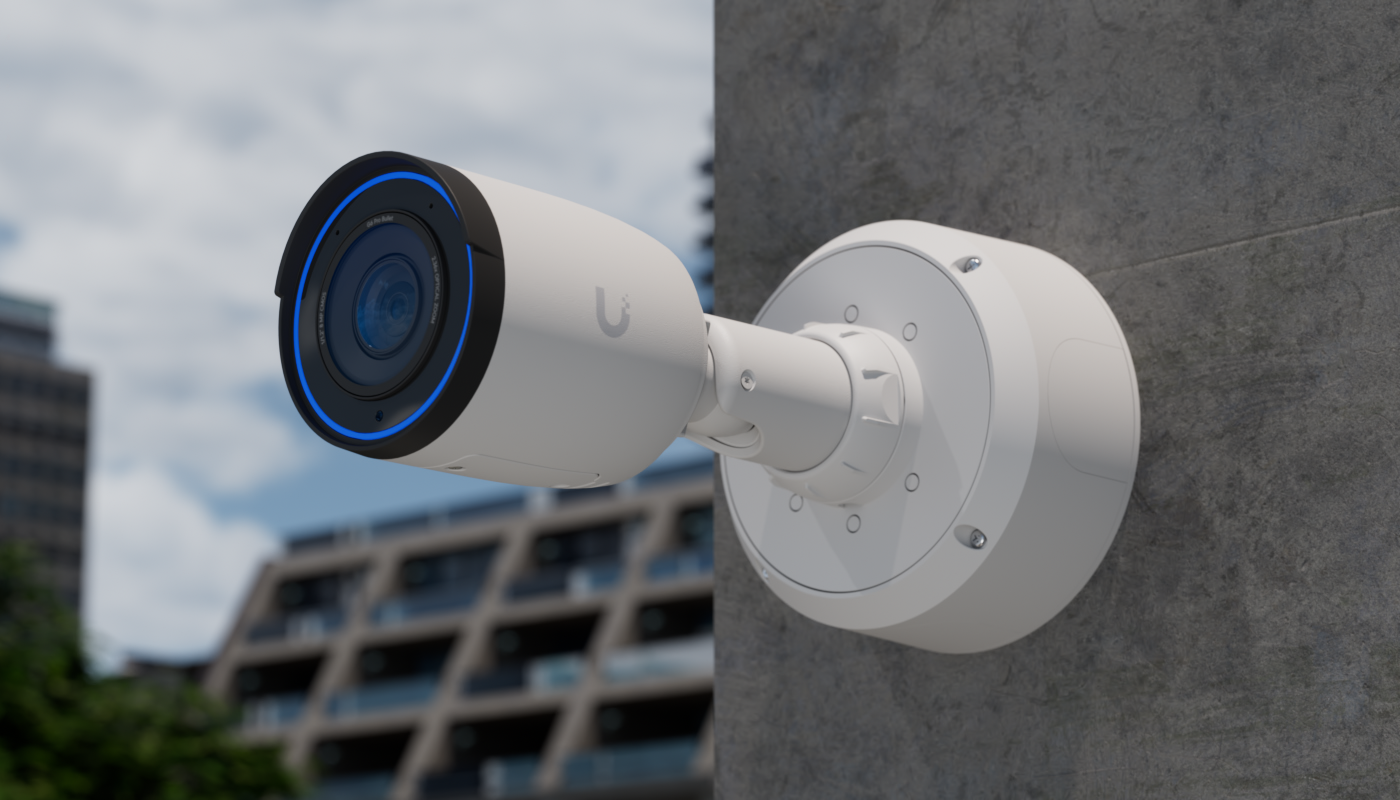
Worth noting: the platforms we specify, including UniFi Protect, sit outside the restricted manufacturer list, so eligibility is rarely the binding constraint on our drawings. Retention and PoE usually are. We would rather spend the client's attention there.