Aug 20, 2026 · Cameras
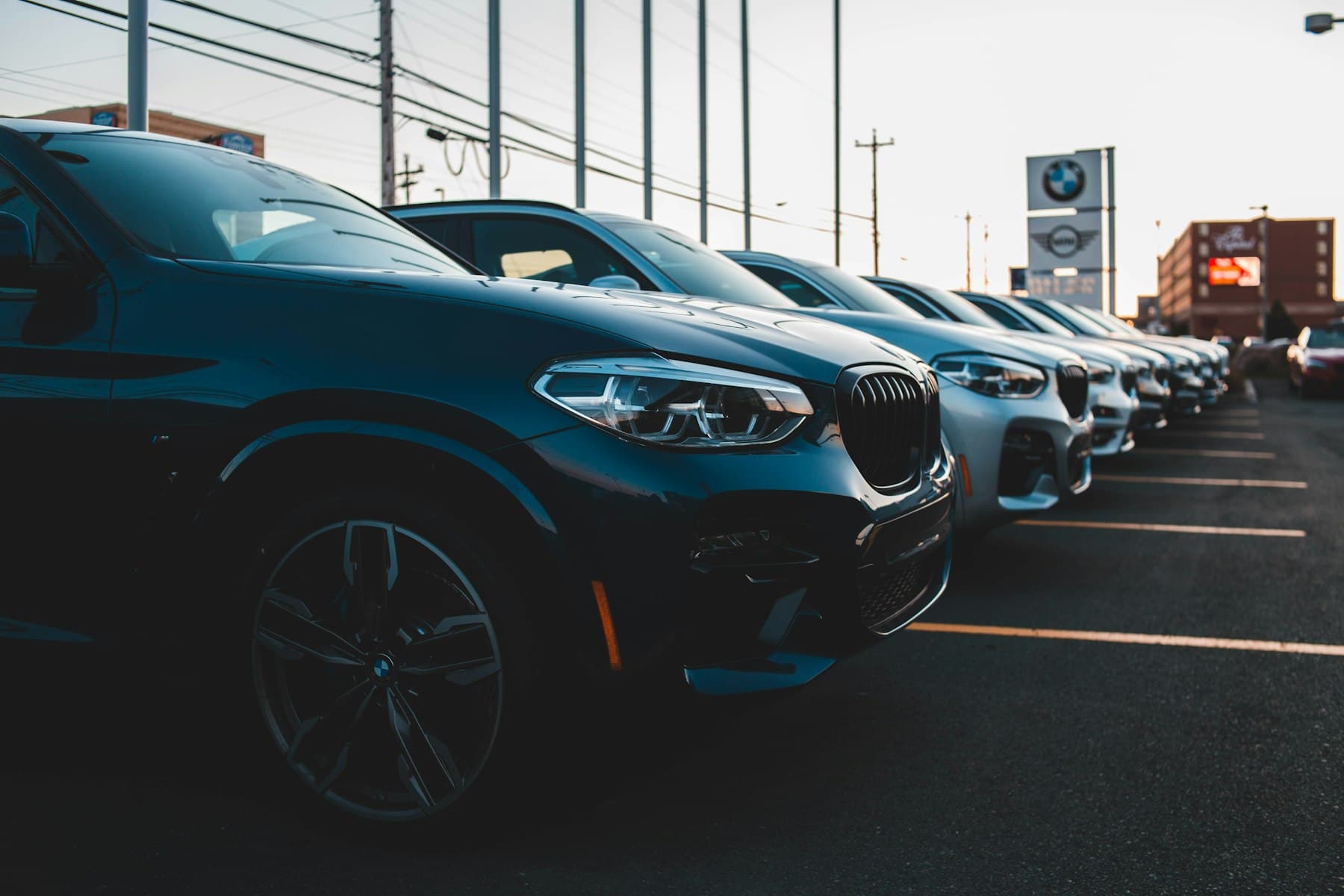
Walk a used-car lot at dusk and you see the inventory. Walk a Porsche or Ferrari store at dusk and you see the same thing with different badges — a few cars inside the glass, and the money parked in rows under the light poles. The asset that matters overnight is on asphalt. The camera system most dealers buy still points at the building.
That is not a brand problem. It is a coverage problem. We see it on independent lots and on high-line stores that spent real money on cloud cameras. Verkada on the fascia, a nice app on the GM's phone, and a black hole starting thirty feet past the customer entrance. The lot edge where someone can cut a fence, crawl under a row of trucks, or roll a vehicle toward the street is not in the drawing.
You are going to get probed either way. The question is whether anyone can call the authorities while it is happening — or whether the first notice is a sales manager counting empty stalls at 7:15 a.m.
The inventory is not in the showroom
Dealers keep a handful of cars indoors. Everything else — the used row, the new truck bank, the overnight service hold, the overflow along the fence — sits outside. Catalytic converter crews prefer that geometry: high ground clearance, open aisles, and hours with nobody walking the row. NIADA has described the independent-lot version plainly — converters as an inventory problem, not a retail owner's driveway problem — including a report of sixteen converters taken by two people in under an hour. Vendor case write-ups describe similar overnight hits: fence cut, power tools, a dozen-plus converters gone in about thirty minutes while cameras, if they existed, watched the wrong plane.
Full vehicle theft off a dealership is the louder headline. Converter and wheel jobs are the quieter overnight bleed. Both happen on the lot. Neither is solved by a dome aimed at the showroom door.
Premium cameras on the wall are still wall cameras
High-end stores make the same mistake with better packaging. They buy Verkada or another cloud camera line, mount it on the building, and treat the purchase as "security done." The product may be fine for a vestibule, a parts counter, or an F&I hallway. It does not magically extend optical coverage across two acres of inventory.
A camera on the exterior of the building sees approaches to the building. It does not see the back row, the far light pole, or the dark corner where the fence meets the alley. If the drawing stops at the façade, the system stops at the façade — regardless of what the subscription costs.
Used lots often underbuy. Luxury stores overbuy the wrong plane. The failure mode is identical: the assets are out there, and the sensors are in here.
Why "finding out in the morning" loses
The National Insurance Crime Bureau and the Insurance Information Institute keep repeating a timing point that dealers underweight: early reporting improves recovery odds. NICB's 2023 theft trends put same-day recovery of reported passenger-vehicle thefts around 34 percent, with about 45 percent recovered within two days, and more than 85 percent eventually recovered in that reporting set. The agency's standing advice is blunt — call law enforcement as soon as the theft is known.
"As soon as the theft is known" is the design requirement. A recorder that only faces the building often learns about a lot theft when someone notices a gap in the row. By then the vehicle or the converters are gone, the plate is cold, and you are filing a claim instead of guiding a response. Video that can alarm on after-hours person or vehicle activity at the fence line — while the act is still in progress — is the difference between a call that can still matter and a morning inventory surprise.
Cameras do not make a lot untouchable. They buy time and evidence. Time is the part dealers leave on the table when coverage stops at the showroom glass.
What the far edge actually needs
Coverage at the furthest points of the property is a placement and path problem, not a brand badge.
- Light poles and far corners — mount where the inventory rows and fence lines can be seen at night, not only where conduit already exists on the building.
- A designed path to those poles — when cable will not reach, that is a Cambium point-to-point or point-to-multipoint hop off the building to a small switch and cameras at the pole. It is the same pattern we design for school lots and warehouse yards: the LAN has to leave the building honestly.
- After-hours detection that someone will answer — UniFi Protect person and vehicle analytics, line crossing on fence approaches, and LPR on the exit lane when plates matter. A monitored alert path beats a silent archive.
- Lighting that matches the shot — a pole camera aimed into glare or into a dark row produces a silhouette. The coverage drawing includes the light, or the clip is useless.
The building cameras stay. They cover doors, the key room approach, and the service drive. They are not a substitute for the lot plane.

The short version
If the inventory sleeps on the lot, the cameras that protect it have to live on the lot — including the furthest light poles — with a path that keeps them on the recorder after midnight. Used or Ferrari does not change the geometry. A premium camera on the building that never sees the back row is an expensive way to learn about a theft the next morning. Call police while it is happening, and you still might lose a car. Wait until opening, and you are mostly documenting the loss.